🤯 Confused by virtual office options in the UK?
You’re not alone — most founders don’t struggle with choosing a provider, they struggle with understanding what they’re actually buying.
The real reason founders get burned
Choose a virtual office that actually works
BetaOffice combines a compliant registered office, director service address, and reliable digital mail handling — without hidden complexity.
Most founders buy a “virtual office” thinking it’s one simple thing:
“A London address for my company.”
In reality, in the UK a virtual office usually covers three separate functions:
- Registered office address
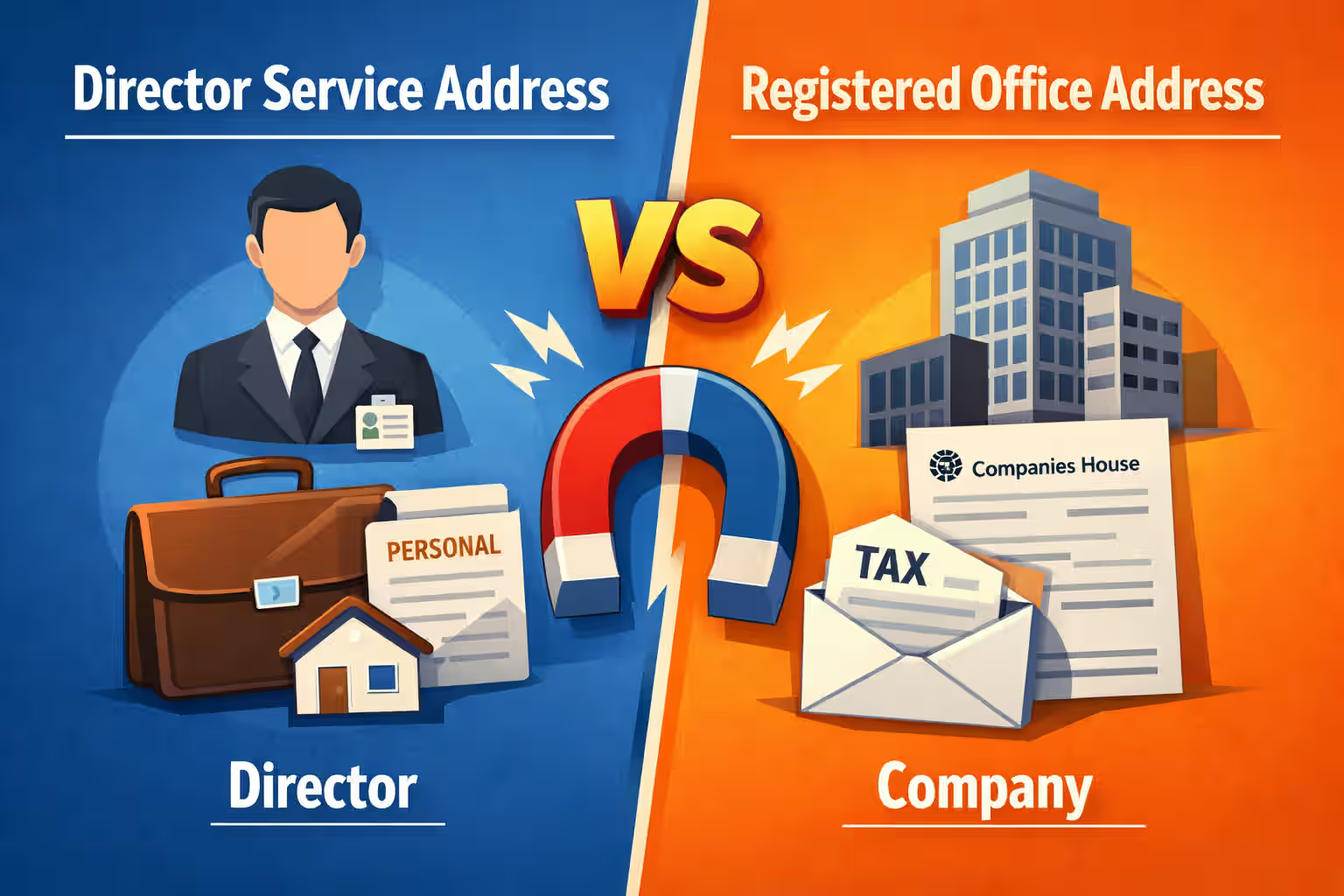
- Director service address
- Mail handling
👉 The confusion starts when these are bundled unclearly or treated as interchangeable.
Problems start when these roles are bundled unclearly or treated as interchangeable.
1) Registered office: what it really means
A registered office address is the company’s official legal address on Companies House.
It is where:
- Statutory notices are sent
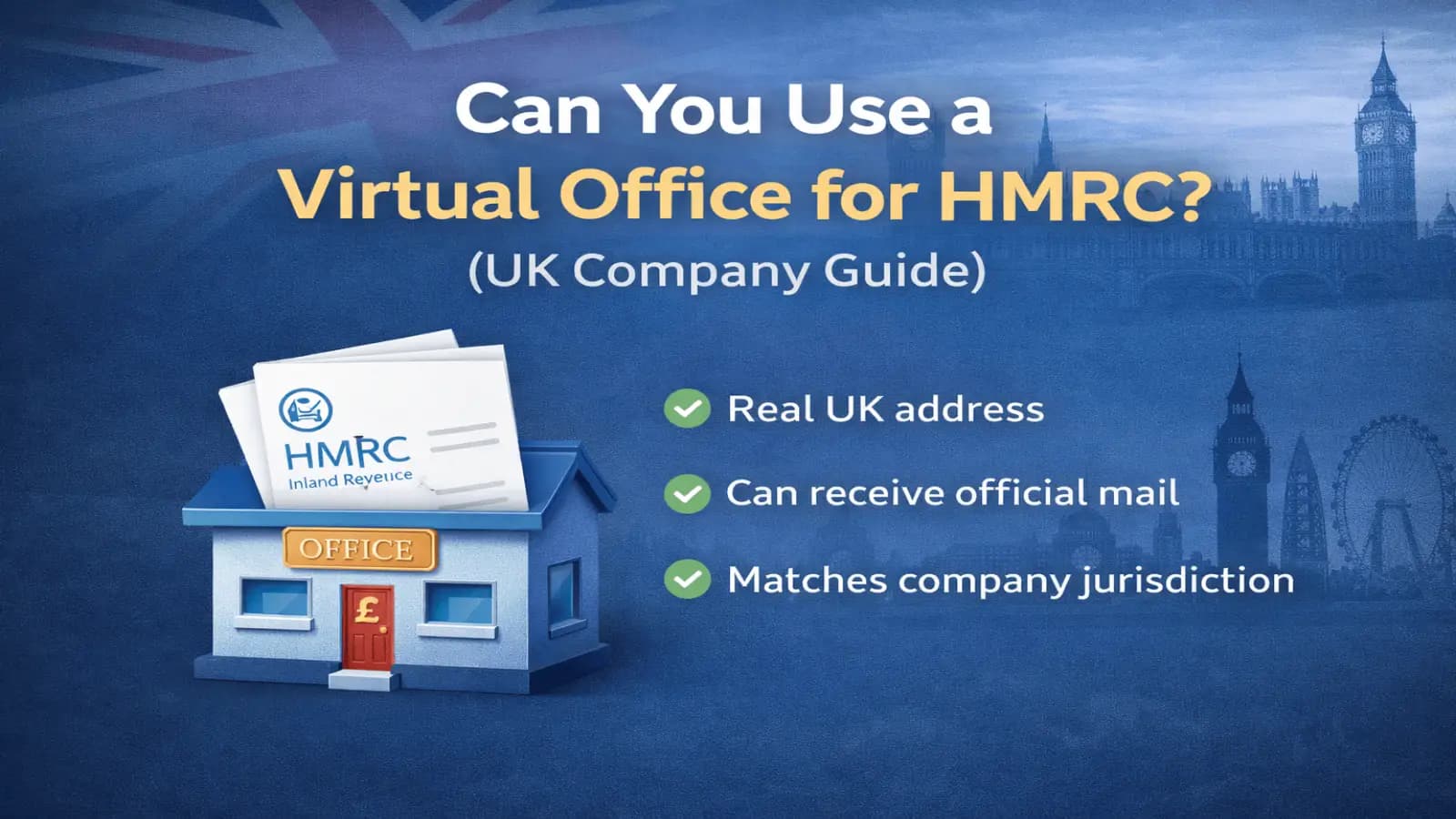
- HMRC correspondence is delivered
- Legal documents must reliably arrive
It must be a real, deliverable UK street address and cannot be a PO Box.
👉 This is the legal foundation of your company setup.
For a clear explanation of how this works in practice: 👉 What is a registered office address?
If you're evaluating structured setups, this overview shows how a compliant
👉 registered office in London
is typically arranged.
2) Director service address: the privacy layer founders miss
Many founders don’t realise that personal addresses may become visible on public records.
A director service address allows directors to:
- Keep their home address private
- Use a public-facing address instead
- Remain compliant with disclosure rules
👉 This is the privacy layer most founders only discover after setup.
This is one of the most common reasons founders adjust their setup later.
3) Mail handling: where the real risk lives
Mail handling is often treated as secondary — but it determines whether a setup works smoothly.
Key questions founders should ask:
- Is all mail scanned, or only selected items?
- Are there scan limits or per-letter fees?
- How long is mail retained?
- Can letters be forwarded?
- Is there a searchable archive?
In practice:
- HMRC letters are time-sensitive
- Bank checks are strict
- Remote founders depend on digital access
👉 This is where most “cheap” setups fail.
For a practical example of how a modern London setup combines compliance and mail handling, see: 👉 Virtual Office London
Why banks reject some virtual office addresses
Banks usually don’t reject virtual offices outright.
Rejections tend to happen when:
- The address resembles a mailbox rather than an operational base
- Mail handling appears unreliable
- Address records are inconsistent
- Providers cannot support verification requests
👉 In most cases, the issue isn’t the virtual office — it’s how it’s structured.
Mailbox-style setups often create friction later — even if technically legal.
Common myths (and what’s actually true)
Myth 1: “Any London address is fine.”
Reality: It needs to be a reliable, deliverable address suitable for statutory and verification workflows.
Myth 2: “It’s just for Companies House.”
Reality: Your registered office becomes a reference point for HMRC, banks, accountants, and contracts.
Myth 3: “Mail scanning is always included.”
Reality: Many providers include small allowances, then charge per item.
Myth 4: “I can just use a PO Box.”
Reality: PO Boxes are not accepted as registered offices and often cause verification issues.
👉 Can a PO Box be used as a business address?
A simple “good setup” checklist
A UK virtual office setup is usually solid if:
- The registered office is a real UK street address
- A director service address is used if privacy matters
- Statutory mail can be accessed quickly
- Fees are transparent
- Address details are consistent across filings
👉 If all of these are met, the setup will usually pass Companies House, HMRC, and bank checks.
Final takeaway
A virtual office isn’t just an address.
It’s infrastructure — and when the roles are clearly separated, it provides:
- Compliance confidence
- Privacy protection
- Smoother verification
- Less founder stress
🚀 Avoid the common setup mistakes
If you want a virtual office that actually works in practice:
✔ Real UK street address (not a mailbox)
✔ Separate privacy layer for directors
✔ Reliable digital mail access
✔ Transparent pricing
👉 Explore a complete London setup here:
Virtual Office London