⚖️ Worried a virtual office might not be legal?
Most founders aren’t actually facing a legal issue — they’re using the wrong type of address setup.
Quick answer
Use a fully compliant UK business address
BetaOffice provides a real London street address accepted by Companies House, HMRC, and banks — with reliable digital mail handling.
Yes — virtual offices are legal in the UK, provided they meet Companies House and HMRC requirements.
The key rule is simple:
Your business must use a real, physical UK street address capable of receiving official mail and legal documents.
The confusion usually comes from how the address is structured — not from legality itself.
What does “legal” actually mean?
When founders ask whether a virtual office is legal, they usually mean:
- Can I use it as my registered office?
- Will Companies House accept it?
- Will HMRC send letters there?
- Will banks approve it?
👉 In practice, all of these are accepted when the setup is compliant.
The answer depends entirely on whether the address satisfies official compliance rules.
Companies House rules (registered office)
A registered office must:
- Be a real, physical street address
- Be located in the correct UK jurisdiction
- Be capable of receiving official documents
- Not be a PO Box-only address
Virtual offices are permitted if these conditions are met.
For a detailed breakdown of registered office requirements, see:
👉 What is a registered office address?
If you're evaluating practical setups, this overview explains how a compliant
👉 registered office in London
is typically structured.
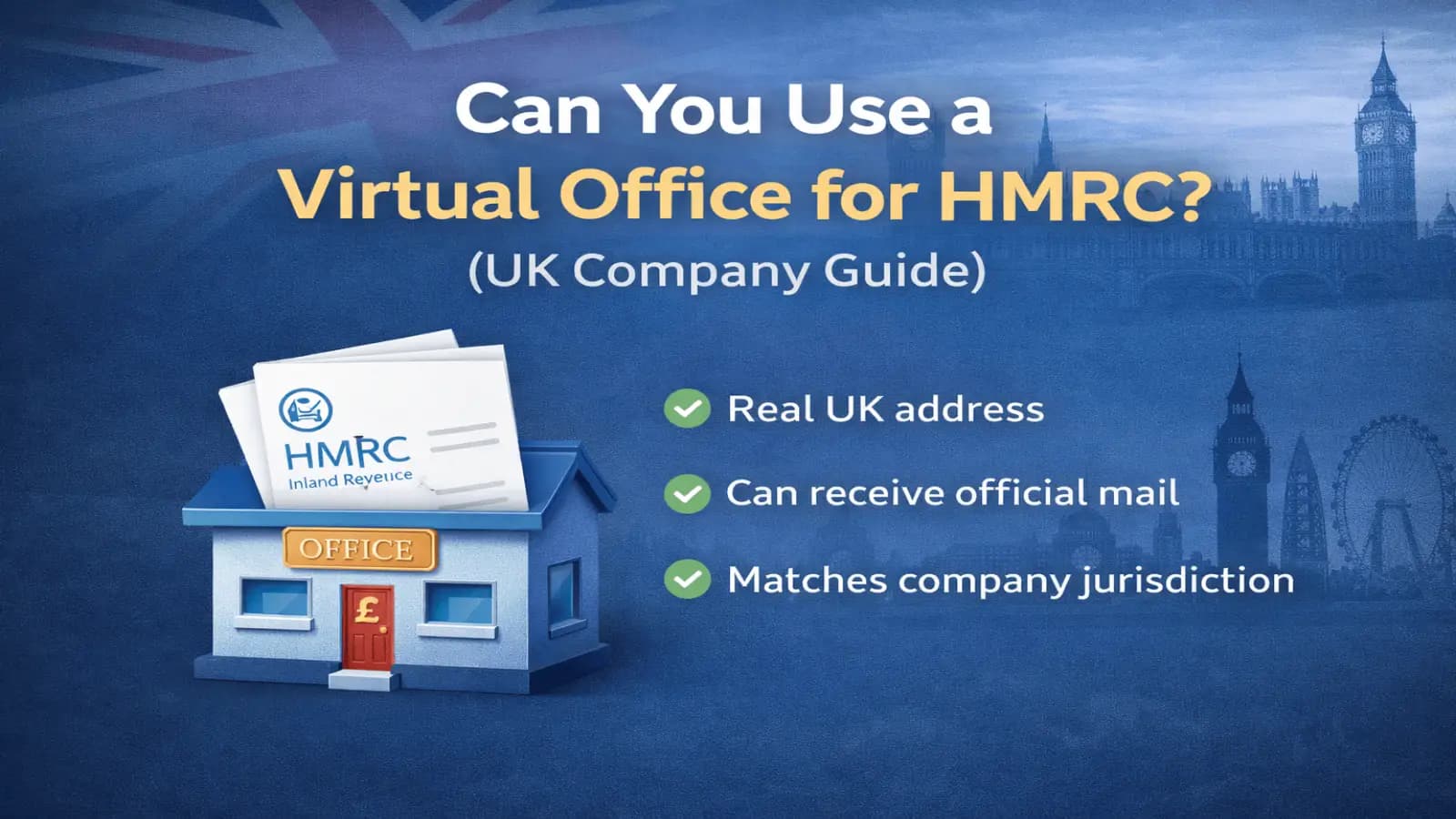
HMRC correspondence
HMRC sends:
- Corporation tax notices
- VAT letters
- PAYE updates
- Penalties and reminders
HMRC does not prohibit virtual offices.
What matters is:
- Mail is reliably received
- Deadlines are not missed
- Official documents can be accessed promptly
👉 Most real-world issues come from missed or delayed mail, not from legality.
Compliance failures usually stem from poor mail handling — not from the use of a virtual office itself.
What is NOT legal (common mistakes)
Problems arise when:
- ❌ The address is PO Box-only
- ❌ Mail cannot be accessed reliably
- ❌ Legal service is not possible
- ❌ The jurisdiction does not match incorporation
- ❌ The provider blocks statutory correspondence
👉 These are the situations that lead to rejections or compliance issues.
For clarity:
👉 Can a PO Box be used as a business address?
Virtual office vs PO Box (legal distinction)
| Feature | Virtual Office | PO Box |
|---|---|---|
| Real street address | ✔ | ✖ |
| Companies House compliant | ✔ | ✖ |
| HMRC correspondence | ✔ | Limited |
| Legal service possible | ✔ | ✖ |
| Bank acceptance | ✔ | Often rejected |
👉 This is one of the most misunderstood distinctions in UK company setup.
Banks & payment providers
Banks typically require:
- A real UK address
- Consistency with Companies House records
- Evidence that correspondence can be handled securely
Issues arise when founders attempt to use mailbox-style services that do not meet statutory standards.
👉 In most cases, switching to a compliant address resolves verification issues.
A compliant street-address virtual office — such as a
👉 London virtual office setup —
is generally acceptable when structured correctly.
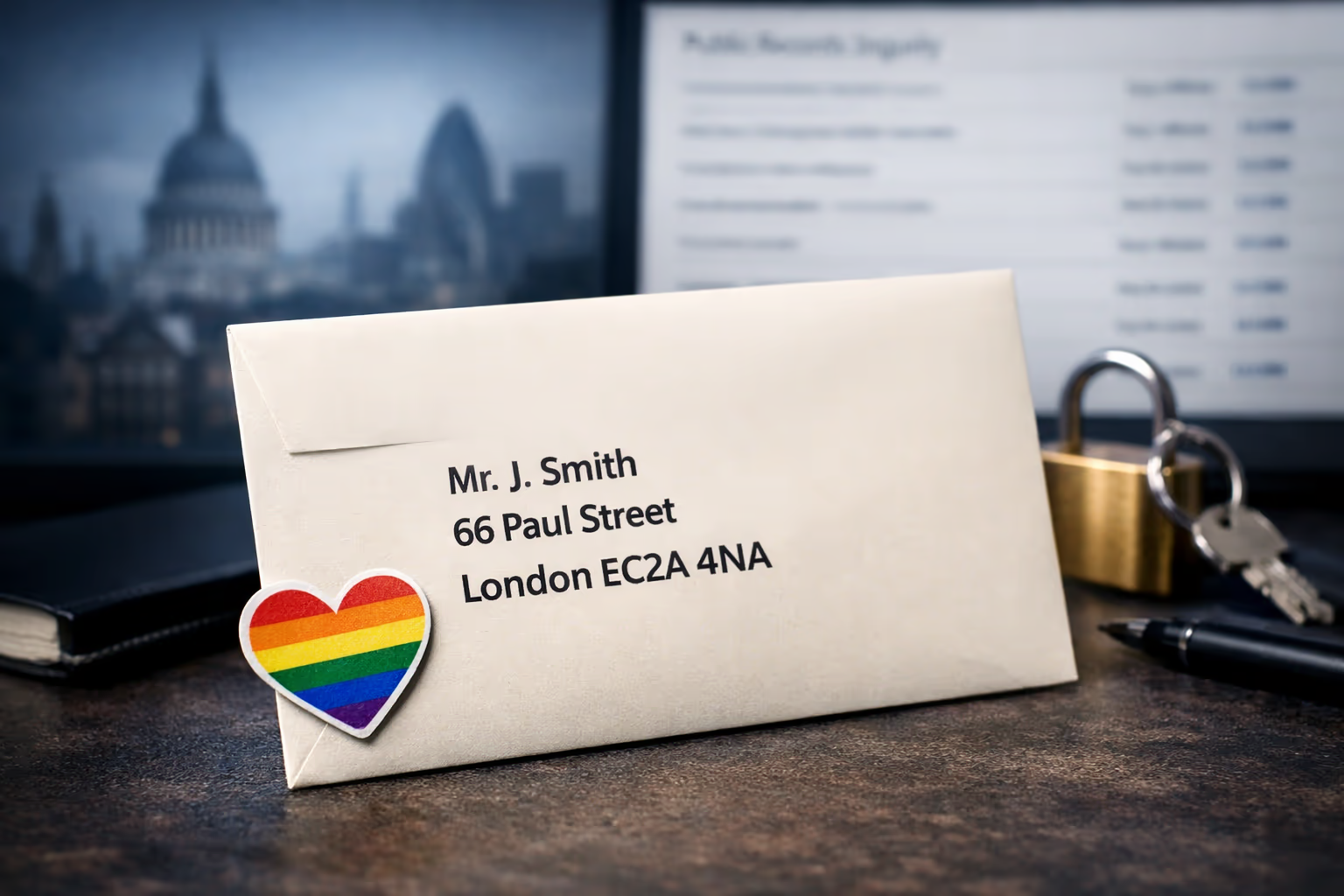
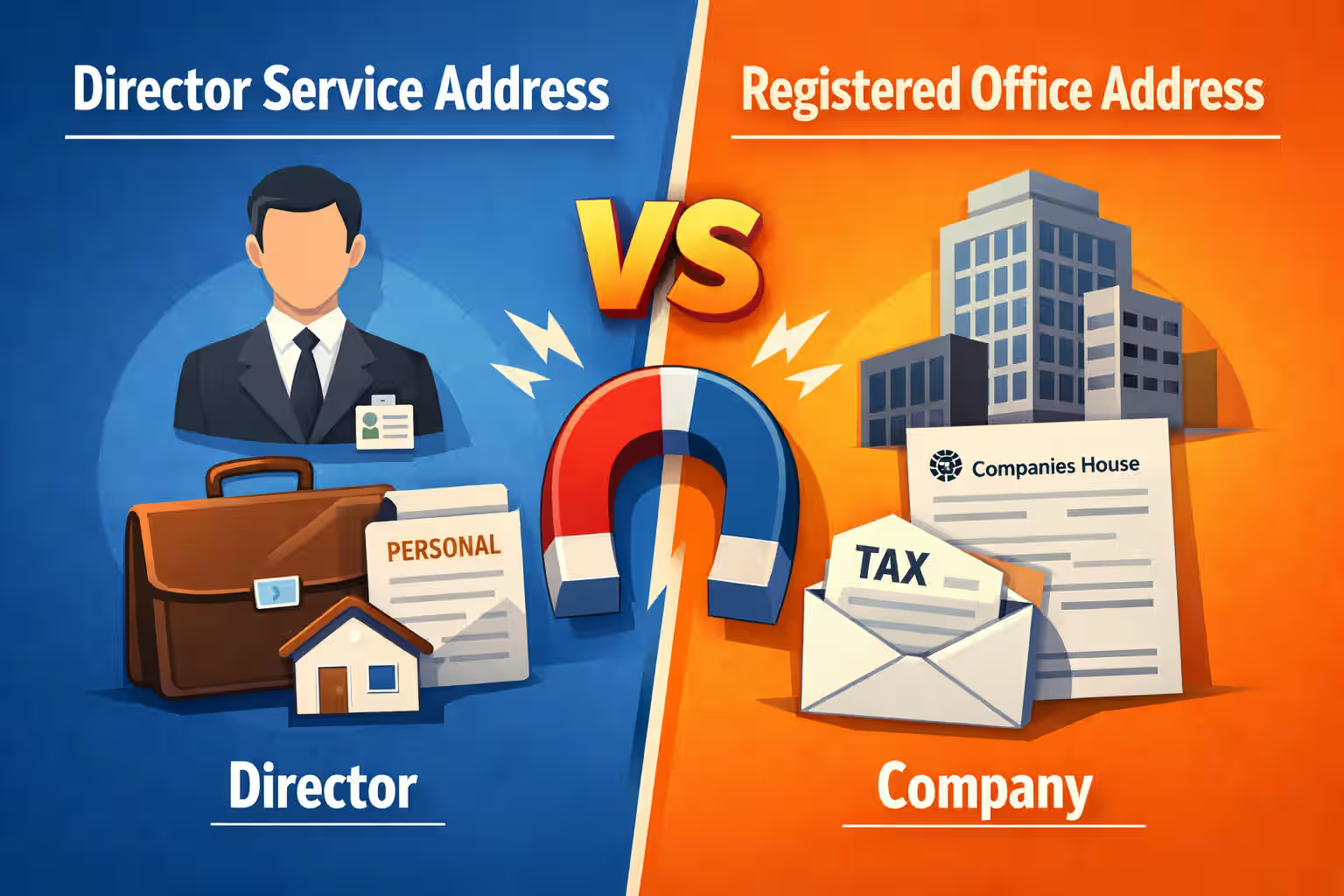
Director service address (privacy)
UK law allows directors to use a service address instead of their residential address.
This provides:
- Privacy protection
- Public record compliance
- Separation of personal and company details
👉 This is one of the most common and legitimate uses of virtual office services.
Is a virtual office legal for non-UK residents?
Yes.
Non-UK residents may:
- Incorporate UK companies
- Use a UK registered office
- Receive statutory mail digitally
This structure is widely used by SaaS founders, consultants, ecommerce sellers, and international startups.
When a virtual office may not be sufficient
A virtual office might not be enough if:
- You require a daily staffed premises
- A regulator mandates a trading location
- You host in-person client operations
For most digital-first companies, however, a compliant registered office setup is sufficient.
Legal checklist
A virtual office is compliant in the UK if:
- It is a real UK street address
- Companies House accepts it
- HMRC mail can be accessed
- The jurisdiction matches incorporation
- Legal documents can be served
- It is not PO Box-only
👉 If all of the above are satisfied, the setup is considered fully compliant.
Final takeaway
A virtual office is fully legal in the UK when structured correctly.
Most issues arise from misunderstanding compliance rules — not from virtual offices themselves.
Used properly, a virtual office is simply:
- Compliance infrastructure
- Privacy protection
- Structured mail handling
—not a loophole.
🚀 Set up your company the compliant way
If you want to avoid legal issues and verification problems:
✔ Use a real UK street address
✔ Ensure mail is handled reliably
✔ Keep your personal address private
👉 Explore a compliant London setup here:
Virtual office London